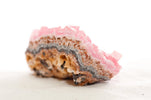
Discover how you can identify real vs fake rhodochrosite, explore its meaning and history, spot common imitations, and learn how to care for your crystal properly.
Real vs Fake Rhodochrosite: A Crystal Lover's Guide
Rhodochrosite is a pink manganese carbonate mineral. It is used as an ore, a gemstone, and a crystal.
In addition to its industrial uses, rhodochrosite is known for its spiritual properties.
Rhodochrosite also holds historical significance, especially in South America.
When evaluating authenticity, look at the crystal's color and pattern to spot the real deal.
To further verify authenticity, some tests can confirm if a specimen is genuine.
Be aware that fake crystals can be made from quartz, fluorite, or rhodonite.
You should care for your crystal and store it properly to keep it in top shape.
Sweet Home Mine is popular for producing great specimens.
Questions and Answers: Can fake rhodochrosite have healing properties? How can consumers protect themselves from unknowingly purchasing fake rhodochrosite?
Pink Stone Rhodochrosite
If you have a question: how can you identify fake rhodochrosite from the real one? You are in the right place!
Welcome to the crystal lover's guide to real vs fake rhodochrosite! This guide will help you distinguish between real vs fake rhodochrosite crystals.
It's always best to start with the definition. So, what is rhodochrosite? The crystal is a pink manganese carbonate mineral.
Rhodochrosite is especially fascinating because it doesn’t exist as a single, rigid material. Instead, it forms a complete solid solution series with iron carbonate, allowing the two to blend seamlessly.
Think of it as a smooth spectrum rather than a sharp divide—one end rich in manganese, the other gradually influenced by iron.
Within this shared internal framework, manganese can be partially replaced by iron, along with smaller amounts of calcium, magnesium, and zinc. Because these elements fit comfortably into the same structural positions, the material can subtly change without losing its overall stability.
Most natural examples fall somewhere along this continuum, shaped by the specific mix of elements present during formation.
These quiet substitutions have noticeable effects. As the balance of elements shifts, so do the mineral’s physical character and appearance. The soft, warm pink tones commonly associated with manganese-rich material can evolve as iron and other elements become more prominent.
Over time, these changes may transform the color toward grayish, yellowish, or brownish shades, creating a wide range of visual expressions within the same material.
This natural variability is part of rhodochrosite’s appeal. Each piece reflects a unique chemical story, captured in gentle color changes and subtle differences that reveal how small shifts at the atomic level can create striking diversity in the natural world.
Hopefully, this information helped define rhodochrosite in a clearer, more engaging way.
So, Can Rhodochrosite be faked?
Fake rhodochrosite is common. Fortunately, there are ways to spot it. With this guide, you will learn to recognize the key warning signs.
So, what is fake rhodochrosite? A fake rhodochrosite crystal is a synthetic crystal designed to look like a real crystal, but it is not natural. It is a pink material that often has shiny, sparkly patterns when polished. The fake is usually made from transparent material. The transparent material can be cut into faceted gems.
You can identify a fake by reviewing general information. Knowledge of color, spectrum, alternate names, origin, care, and types of the stone helps distinguish real vs. fake rhodochrosite.
It is important to care for this crystal properly. Proper storage will help it remain beautiful and useful over time.
Ethical sourcing is also important. Avoid exploiting resources, especially if your crystal comes from countries such as South Africa, where exploitation can occur. For example, one mining location for this crystal is the Hotazel mine in South Africa.
Did you know the crystal is considered the official state mineral of Colorado in the United States!?
We will examine the crystal's properties and historical significance. We will learn how to spot real vs fake rhodochrosite. Discover how to care for your gemstones. Take a look at the things that determine the crystal's value. Let's get into the world of real vs fake rhodochrosite!
Banded Rhodochrosite and Beads
Banded rhodochrosite has white and pink stripes or circles. Its banding resembles that seen in agate or malachite. Banded rhodochrosite is mined in various locations, including Capillitas in Argentina.
The mineral can be found in both opaque and translucent forms. Its translucent form shows great clarity. Banded Rhodochrosite is fragile. But its unique patterns and colors make it popular.
Fake rhodochrosite beads are made by mixing powdered mineral material and resin. This gives them the appearance of natural beads. These beads can be difficult to distinguish from the real ones. Be careful when buying them. Look for signs such as clarity, color consistency, and weight.
Fake rhodochrosite stalactites often form in holes inside sedimentary and metamorphic rocks. While manganese minerals are usually involved, you’ll find that the fake ones usually have different properties from the real ones.
Understanding Rhodochrosite Mineral
If you like red, you might want to know that... rhodochrosite is known for its red color. It is known as the "Inca Rose" for its connection to the Inca civilization and its rose-like appearance.
The nickname "Inca rose" pays homage to its South American roots, where it is considered a symbol of beauty and culture. Whether called an Inca rose, this crystal continues to charm people around the world with its unique elegance.
This gemstone is not found in too many places. It is often found in association with other manganese minerals. It holds a special place in the hearts of the people of Argentina in South America. It is found there in large quantities.
The gemstone is found in South Africa (especially the Hotazel area), Romania, Peru, Montana, Colorado, Russia, Romania, Spain, Gabon, Mexico, and Canada. Yes, it is even found in Canada! The crystal from Canada has great color variations and patterns.
The crystal from Peru is known for its stunning appearance and vibrant coloration. China is one of the countries where fake rhodochrosite is produced. So be careful if you buy the crystal from China.
Like any crystal, the mineral has spiritual properties. It is said to bring a feeling of ease. The feeling where everything comes naturally. Where you feel in flow with life.
The gemstone is believed to bring joy. It lifts depression and sadness. It makes you feel light. Like a heavy burden has been lifted off your shoulders. This gemstone is the right choice if you feel heavy and uninspired. It gives inspiration. Inspiration and purpose...
Do you feel like your life lacks purpose? Do you need more passion in your life? Then, this gemstone can help you. The gemstone is believed to help one find purpose. The purpose that you can passionately follow. That purpose can be anything. A new goal. A new reason to live. This leads us to another question...
Do crystals really work? How did they change your life?
Do crystals work? Do they change lives? Some would say that these questions are silly. But they are not! Crystals do work and change lives. At least according to some people. Just hear some stories. Actually, according to many stories, they bring healing.
These stories go back centuries. Many value crystals for mindfulness, intention-setting, and self-reflection. Of course, the effects can be subjective.
You may experience something different. Some say crystals make them more grounded, focused, and balanced. Others just like their beauty and symbolism. Maybe you’ll feel calm and connected to yourself. It depends on your beliefs and experiences. My advice: Try to be open-minded with your crystals. See how they resonate with you personally.
In either case, crystals can make your life more wholesome. Give your life some meaning. They can give it magic if you believe in magic. They can inspire you to feel a certain way. They can inspire your creativity, love... whatever you need.
A crystal can serve as your inspiration or muse. Some claim their lives became more meaningful. But it all depends on you and your belief system. Everyone’s experiences are different. The key is: are you open to the crystal’s energy? Are you open to receiving what it offers?
Everyone's experiences are different. It does depend on how open you are to the crystal's energy. How open are you to receiving? The crystal may give. But the question is: Are you open to receiving?
Another question comes to mind: How much does a real crystal cost? The cost of a real crystal can vary. It depends on its type, size, quality, and rarity. Some common crystals, such as amethyst or citrine, can range from a few dollars to a few hundred dollars per piece.
Rarer or larger crystals like emeralds or diamonds can cost much more - thousands or even millions of dollars. Look for the type of crystal you like. Check with sellers you can trust to get an idea of the price.
Colorado:
This Colorado crystal is one of the best. But not if it's fake! You see, fake rhodochrosite from Colorado is popular. This gem from Colorado is valuable and expensive. Collectors love it. They love it for its color and quality.
The Colorado crystal comes in facetable gems weighing 2-4 carats. But be careful when purchasing—make sure you’re getting the real deal!
The Sweet Home Mine in Alma, Colorado, is famous for producing some of the world's best specimens. It is known for its reddish-pink color. It also tends to have distinct crystal formations. Collectors value the gems from the Sweet Home Mine in Alma, Colorado. The ones from this Colorado mine are rare.
Argentina and Africa:
The crystal is often found in Argentina. It is a popular choice for cabochons and jewelry. It is also this country's national gemstone. Sometimes the gem is found in large pieces. Even decorative boxes are made from it here!
A transparent gem can be cut into stones up to about 20 carats. So can fake rhodochrosite. Fake rhodochrosite can display trapiche-like patterns. The patterns are similar to those found in the real gem from the Capillitas mine in Catamarca Province. That's why it can be difficult to tell the fake specimen from the real deal.
Large facetable gems can be found in South Africa. But larger clean stones are rare. And they come at a high price. Fake rhodochrosite often comes from Africa. That's why you should be careful when buying gemstones from this country. Something else to worry about.
Exploitation exists in countries like South Africa. Try to buy ethically sourced gems if buying from this country. Crystals from the Hotazel area of South Africa are especially popular.
Real VS Fake Rhodochrosite Gem
So, how do you test for Rhodochrosite? Well, here are a couple of clues.
Clue number one: Feel the weight. Real crystals tend to be heavier due to their mineral content.
Clue number two: Observe the texture. It should be smooth yet slightly waxy.
Clue number three: Color and pattern consistency. Real gemstones show a harmonious blend.
Rhodochrosite Color, Rhodochrosite Luster, Cleavage, and Birefringence
The gemstone shows a variety of hues. The hues range from soft pink to deep red, often with white bands or swirls. The gemstone forms beautiful banded patterns. Each piece is different because of its unique colors and patterns.
Variations can occur due to other minerals, such as manganese silicate or calcium. Sometimes the color may differ depending on the origin, such as in South Africa or Japan.
Another thing to watch out for is luster. The gemstone has a pearly luster. The good clues to spotting fake rhodochrosite are color, pattern, and luster.
The gemstone has perfect cleavage in three directions. This makes it hard to cut with gem cutters and to wear. After all, it has low hardness and is sensitive to heat. Still, this gem is often used in jewelry as it is a beautiful stone.
Especially, the gemstone from Argentina is popular for jewelry uses. And, it can occur in large pieces. It is also often used as a decorative stone.
A fake one has cleavage in the rhombohedral system of the carbonate. Due to their fragility and heat sensitivity, fake stones can be difficult to cut and wear. However, in protective settings, these crystals can still be used for various jewelry purposes.
The gem shows high birefringence. Birefringence is an important optical property. It is used to tell real vs fake rhodochrosite. The property causes a strong doubling effect in the specimen when viewed under a microscope. This quality can help gemologists identify real specimens.
Manganese and Iron
Fake rhodochrosite is often composed of Mn. This mineral is found in both fake rhodochrosite and the real one. This makes the fake one look like the real deal.
The fake is often made by substituting iron (Fe) for manganese carbonate to look like the real one. This change in chemical composition affects the color, hardness, and gravity.
The fake crystal may contain magnesium as a substitute element, altering its gravity and color. Magnesium can lead to lighter shades of red and pink in the stone.
Tests to Confirm Authenticity: (refractive index, hardness, gravity)
Are there any specific tests that can be done to determine the authenticity of rhodochrosite? Yes, there are. Run a gravity test. This test can spot fakes due to their density.
A real gemstone has distinctive optical properties. Its refractive index can be identified with a refractometer. It has an index of around 1.6-1.8. You can perform a test using the Mohs scale. Real gemstones have a Mohs hardness of 3.5-4.00. All of these tests can tell you if your specimen is real.
Tips:
Visual Test: Be careful of uniform color or excessive banding.
Scratch Test: Perform a scratch test using a harder substance. The crystal should scratch easily.
Specific Gravity Test: Crystal's specific gravity is approximately 3.5-3.7 g/cm³. Measure the stone's weight in air and water to calculate its gravity.
UV Light Test: Some gemstones may fluoresce under ultraviolet (UV) light. This can help distinguish between real vs fake rhodochrosite.
Acid Test: The stone is sensitive to acids, such as vinegar or lemon juice. A small acid drop on an inconspicuous part of a stone can help determine its reactivity.
Spotting Fake Rhodochrosite Rock
This gemstone is popular. That's why there are many fakes. Plastic and glass are used to mimic its color. Be cautious of low prices. Look out for inconsistent patterns. These can indicate fake. And look at the gemstones closely to spot any inconsistencies.
You might ask: How to get a rhodochrosite from here? The answer is to buy from sellers you can trust! You can always trust us. We only source minerals from trusted sources. Such as directly from mines or suppliers who deal with miners.
Common Imitation Materials
You might wonder: is this real rhodochrosite? I will try to answer your question. Fake rhodochrosite is usually produced using dyed dolomite, pink calcite, and glass. These specimens may look like the real deal. But they do not have the gemstone's properties.
Dyed dolomite often shows similar pink hues. The glass can imitate the translucency of real crystal. You should be careful of pink calcite. The specimen's colour patterns are similar to those found in the real crystal. Understanding these imitations can help you spot fake rhodochrosite.
Quartz, Fluorite and Rhodonite
Fluorite looks similar to the gem. And, it is often used as a fake rhodochrosite. But fluorite has its own different properties.
Rhodonite has a similar pink color to the gemstone. It also has a similar manganese-rich composition. That's why rhodonite can look like fake rhodochrosite. But rhodonite is tougher than the crystal.
Rhodonite also has prismatic cleavage. It is a hard stone with weak effervescence. Rhodonite gems tend to show great clarity.
You might ask: Rhodochrosite Or Dyed Fake? Fake rhodochrosite is often made by combining quartz with dyes. But this cheaper specimen is tougher. It is more resistant to scratches. So, if it doesn't scratch as easily, it might be fake rhodochrosite.
Red Flags
What is the value of a rhodochrosite? A quality specimen is valuable. Its price reflects its value. So, here are some red flags to watch out for. The number one red flag is pricing. Especially for large pieces.If a price seems too low, it is likely fake.
This leads to the question: How does the price of fake rhodochrosite compare to genuine rhodochrosite? Fake rhodochrosite is much cheaper. It is made out of cheap materials such as glass or plastic. The price difference can be great. Fake rhodochrosite can be sold at a fraction of the cost of a real one.
The number two red flag is color. Check for inconsistent coloring or overly vibrant red hues. This indicates fake materials.
The number three red flag is perfection. Fake rhodochrosite looks perfect. A natural one has imperfections. Remember, nothing in nature is perfect. If it seems too good to be true, it probably is.
What are the ethical implications of selling fake rhodochrosite in the market?
There are several ethical concerns:
Deception: Selling fake rhodochrosite as real is deceptive. This harms trust and credibility between buyers and sellers.
Consumer Rights: You have the right to accurate information about what you buy. Selling fake rhodochrosite violates that right.
Reputation Damage: Selling fake products harms the seller's and the market's reputations. It is difficult to regain trust.
Legal Consequences: Selling fake goods is illegal in many jurisdictions. This can lead to legal action, fines, and penalties.
Selling fake rhodochrosite is not only wrong but also harmful. It is important to be honest as a seller.
Are there any health risks associated with wearing or using fake rhodochrosite?
Fake rhodochrosite does not appear to pose a direct health risk. However, fake rhodochrosite may have materials or coatings that can cause skin irritation or allergic reactions.
Buy from sellers you trust! You want to avoid any skin contact with any unknown or potentially allergenic materials. Stop using the product if you have any skin reactions while wearing or using it! You might also speak to a dermatologist in such a case.
What measures are being taken by authorities to regulate the sale of fraudulent gemstones like fake rhodochrosite?
Authorities are trying to help. Some of the actions they are taking are:
Monitoring and Inspections: Authorities are doing monitoring and inspections. This is done to stop the sale of fake crystals.
Regulations and standards: There are regulations and standards. Sellers must follow them when selling gemstones.
Collaboration with industry experts: Authorities are collaborating with gemologists, other professionals, and industry experts. This is done to identify fake gemstones. Consumers are educated on how to spot fakes.
Legal actions against offenders: Authorities are taking legal actions against individuals or businesses found selling fake gemstones. There are fines and penalties.
Rest assured. Authorities do their best to protect us.
What are the common methods used to produce fake rhodochrosite?
Dyeing: The stone is dyed. Then its color resembles that of the natural stone.
Imitation: Some materials, like glass or plastic, are shaped and colored to look like real stone.
Composite: different materials are combined to resemble a real gemstone.
Synthetic Production: The gem is made in the lab.
Caring for your Rhodochrosite Gemstone
So, how do you care for the gemstone? Gentle care is important. So is regular cleansing. Rinse your gemstones in lukewarm water. Pat them dry with a soft cloth.
Do not expose them to harsh chemicals or direct sunlight. Do not expose them to heat! This can fade the color and damage the stone. Store your gemstone away from other harder minerals. This prevents scratches. You can always use individual pouches.
How to charge the gemstone? Consider charging it under the moonlight or with selenite. Have an amethyst at hand? Charge it with amethyst! You can also do smudging or sound cleansing. Whatever works for you!
Frequently Asked Questions
Does fake rhodochrosite crystal have healing abilities?
Do you know about the placebo effect? Well, fake rhodochrosite can have that effect. It does not have the energy of a real crystal. But you might believe that it does. And it is your belief and your energy that might create the change.
Is rhodochrosite valuable?
It depends on so many things. To begin with... Raw stone is not that valuable. But a gem-quality one is. It also depends on the location. The gemstone from Colorado is expensive. Clarity also matters. Lower-clarity gems are less valuable.
Some low-clarity gems cost $20 per carat. Also, look for a smooth surface. The one that is free of visible cracks, chips, or scratches. You want the gemstone free of those.
If you ask: how can you tell high-quality Rhodochrosite? And, I am talking about rougher stones. Not gemstones. The answer is simple - it has a red-to-pink color. It shows distinct banding or patterns. It has a vibrant and consistent color. The stone has no dull areas or discoloration.
What is gem quality rhodochrosite price?
The price depends on many things. Things as clarity, cut, colour intensity, and location. The medium color intensity is the most popular. Medium red-orange colour is the most popular. The following are the prices per carat.
The gems of this color cost between $400 - $450. Medium pink and red gemstones cost about $350. Light pink gem costs about $250. One in a medium-dark red shade is usually sold for $200.
Colorado: How much is rhodochrosite worth?
You might wonder how pricy the gem from Colorado is. Well, it can be expensive. It can be as high as $10,000 or as low as $100 per carat! Of course, the gem costs that much if it is of a really high clarity. Lower-clarity ones cost much less. As you can see, the prices on the market vary.
Argentina: How much does rhodochrosite cost?
You probably saw this crystal from Argentina. Gems from this country are common. So you might wonder what the average price is. This question is not that easy to answer. There are many sellers. And they ask for different prices.
The prices range from $20 to $1,000 per carat. They may be even lower or higher. It all depends on the seller. But the prices do tend to reflect quality.
Is rhodochrosite rare?
The well-formed gemstone is rare. The "best" specimen has a name. It is the largest specimen as well. You might ask: What is the name of this crystal? It is Alma King. It is about 14 cm by 16.50 cm.
The specimen was collected from the Sweet Home Mine in Alma, Colorado, United States in 1992. By looking at it, you can tell how unique it is. How rare it is. It hits you that this crystal, when it is well-formed, is indeed rare.