

Tarot the Hierophant: What's It Really Mean?
, by Nika White, 20 min reading time
, by Nika White, 20 min reading time
Explore the profound meanings of tarot the hierophant card. Discover its astrological connections, elemental influences, and interpretations in love and relationships.
The Hierophant is a significant character in the world of Tarot, representing one of the cards in the Major Arcana. I see this card as a symbol of tradition, conformity, and spiritual or religious guidance. Its appearance in a Tarot reading often points to the societal structures and institutions that one is navigating or seeking to understand. The imagery often depicts a religious or spiritual leader, suggesting an association with established beliefs and the transfer of knowledge within the confines of conventional wisdom.
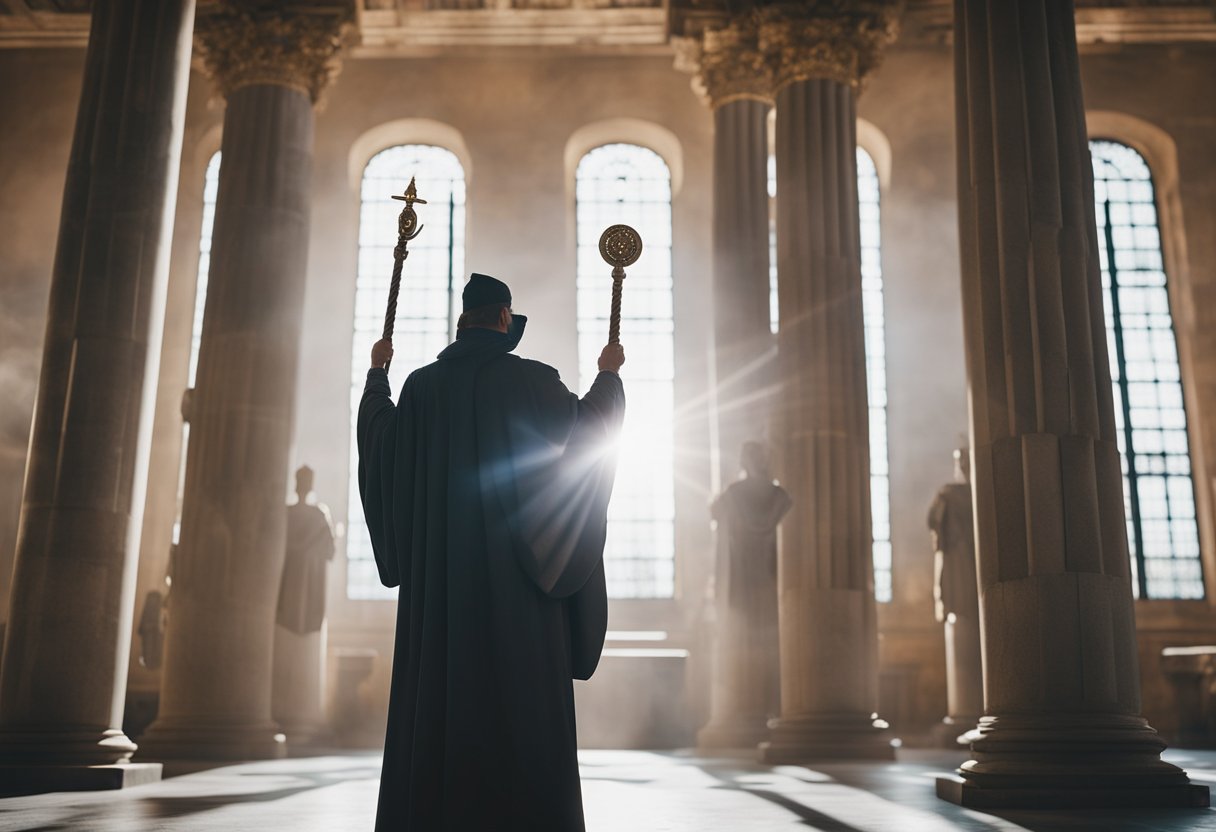
I understand that the role of The Hierophant in a Tarot spread can elicit a wide range of interpretations. However, it frequently emphasizes the importance of guidance, whether through a mentor, counselor, or religious figure. When The Hierophant appears, it might be an indication for an individual to lean on traditional wisdom or consult with someone who provides spiritual counsel.
In navigating the complexities of life, The Hierophant serves as a reminder of the value of established traditions and the lessons of our predecessors. I recognize it as a bridge between the sacred and the secular, guiding us through rites of passage and the embodiments of cultural norms. Whether one is seeking conformity or understanding the boundaries within which they can express their individuality, The Hierophant stands as a totem of conventional norms and shared wisdom.

In this section, I delve into the rich historical roots and symbolic meanings of the Hierophant tarot card, which holds significant ties to tradition and spiritual leadership.
The Hierophant, historically known as the High Priest or Pope, originates from the Tarot's Major Arcana as its fifth card. This figure has roots deeply embedded in the ecclesiastical hierarchy of the Church. I understand that the Hierophant embodies the bridge between heaven and earth, serving as an intermediary through established religious practices.
The symbolism behind the Hierophant is layered and complex. As a representation of traditional values and institutions, the Hierophant speaks to the importance of societal structures and shared beliefs.
My exploration of the Hierophant's association with the divine highlights the card's role as a conduit to higher understanding and spiritual authority. This tarot figure embodies the link to spirituality that humans often seek.
In summary, the Hierophant tarot card is a potent symbol of tradition, spiritual guidance, and the interplay between religious structures and the individual's journey to enlightenment. The historical context and rich symbolic imagery woven into the card offer nuanced insights into its significance within the tarot.
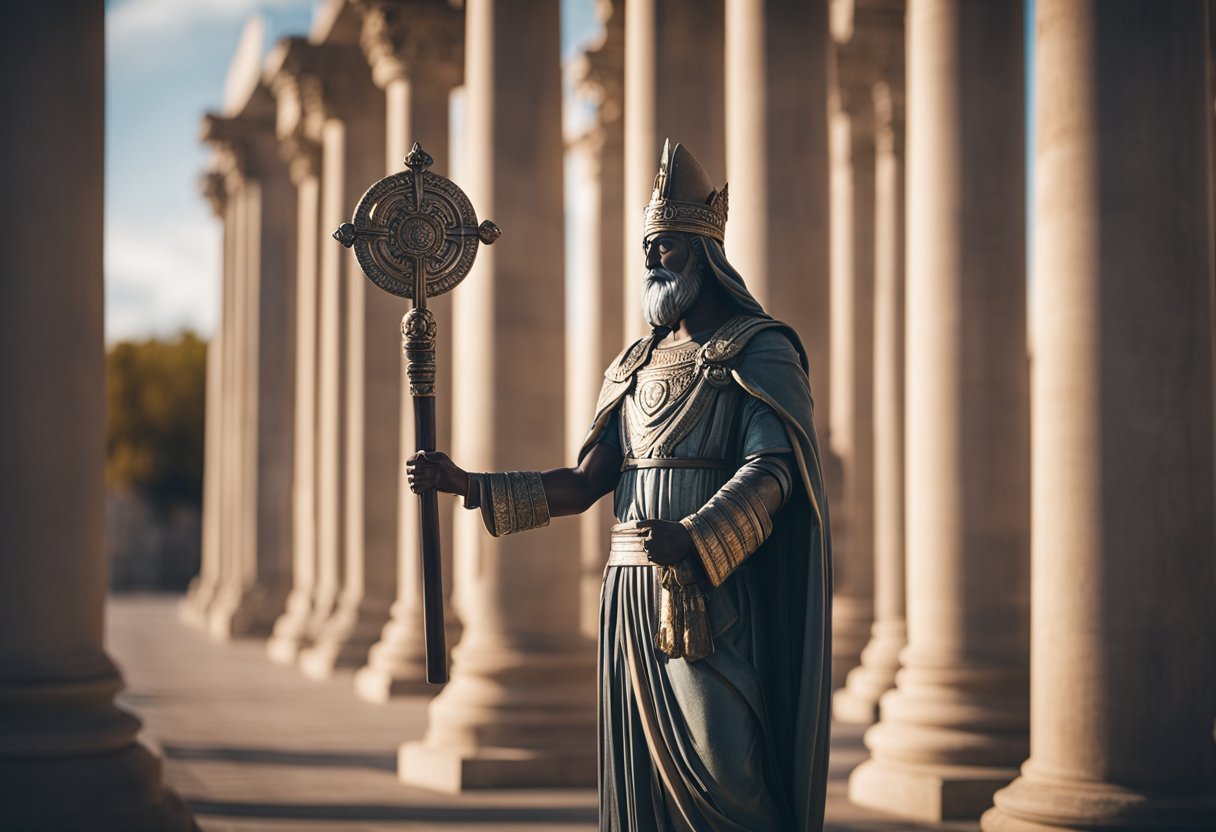
I observe that the Hierophant Tarot Card is rich in symbolism, serving as a visual conduit of meaning which blends religious iconography with esoteric elements.
In the Hierophant Tarot Card, I note a figure often represented as a religious leader or a pontiff, which resonates with the card’s association with tradition and hierarchy. Of particular interest:
Various iconographic elements on the Hierophant card deepen its meaning:

In my exploration of tarot, I've found that each card bears unique connections to astrological signs and elements, as well as planetary influences. Specifically, The Hierophant has some distinct associations that provide deeper insight into its symbolism and interpretation.
The Hierophant is strongly associated with the zodiac sign Taurus. Taurus is an Earth sign that is known for its affiliation with tradition, stability, and material aspects of life. This aligns with the essence of The Hierophant card, which often represents conventional wisdom and established institutions.
In my studies, I've seen how The Hierophant is linked to the element of Earth. This elemental correspondence reinforces the card's themes of grounding, material world, and a focus on societal norms.
Accordingly, Taurus is ruled by the planet Venus, which imbues The Hierophant with Venusian qualities such as harmony, values, and a capacity for love. However, the card is sometimes also connected to Jupiter, the planet of growth and expansion, highlighting the potential for evolving traditions and beliefs.

In tarot readings, The Hierophant often represents established belief systems and traditional values. This card signals the significance of wisdom and knowledge, whether imparted through institutions or personal mentors.
When I interpret The Hierophant in an upright position, I see it as a symbol of traditional values and beliefs. It suggests adherence to established societal conventions and points to the importance of spiritual wisdom. The Hierophant in this context may represent a teacher or mentor who guides through sharing knowledge. The concepts of conformity and institutional structures are also relevant here, indicating a time where following tradition is beneficial.
In contrast, The Hierophant in a reversed position can reflect a challenge to traditional structures or belief systems. My interpretation would focus on the need for personal interpretation over institutionalized wisdom. This reversal may suggest embracing a path that diverges from the mainstream, potentially indicating a period of personal growth outside traditional bounds.

In my practice, I've found that The Hierophant plays a pivotal role in tarot spreads by providing insight and highlighting the importance of tradition and structured belief systems. This card often serves as a beacon for interpreting the overall message of the spread, setting a tone that calls for understanding and adhering to established social orders or spiritual paths.
When The Hierophant appears in a tarot spread, I see it as an indication to follow established social norms and traditional values. It's a sign that suggests seeking guidance or mentorship, possibly from a figure who embodies the qualities of The Hierophant itself—someone who is viewed as a master of their domain. There's a call for structured learning where intuition must be coupled with the strength of established practices. Here's a quick look at how I interpret its guidance:
For those who come across The Hierophant, it may serve as a reminder to listen and learn from the experience of others, prioritizing the collective wisdom handed down through generations.
When examining The Hierophant's interaction with other cards, I pay close attention to the dynamics between this card and their counterparts. Here's how I interpret some of those interactions:
For me, the nuanced relationship between The Hierophant and other cards in the spread is integral in understanding the complexities of the situation at hand. It's not just about the individual card meanings, but how they resonate together within the harmony of the entire spread.

In the context of spirituality, The Hierophant serves as a bridge between the divine and the mundane, offering essential lessons and guiding individuals on their quest for enlightenment.
I recognize The Hierophant as a conduit of spiritual wisdom, paralleling the role of high priests or sages who interpret sacred teachings. This card is intrinsically linked to the Tree of Life in the Kabbalah, where it is associated with the sephira of Chesed—the sphere of mercy and love. Such lessons are not merely the recitation of dogma, but the deep understanding of compassion and spiritual law that The Hierophant embodies.
Key Spiritual Lessons:
In my experience, The Hierophant stresses the importance of discipleship under a spiritual mentor who can navigate through Chokmah, the sephira of wisdom and the second emanation on the Tree of Life. This guidance is vital for understanding the interconnectedness of life and our place within the cosmos.
The paths to enlightenment are multifaceted, and my understanding of The Hierophant's role is pivotal in this journey. He doesn't just impost a strict doctrine but advocates for a personal experience of spiritual truths that lead to a profound realization.
The Hierophant's role is not to create spiritual clones of himself but to help others develop their own connection with the divine, fostering unique and authentic expressions of spirituality. He empowers individuals to find their own enlightenment, while offering the tools and knowledge necessary to do so effectively and meaningfully.
My exploration of The Hierophant tarot card reveals its significant role in shaping cultural perceptions and embedding itself within societal structures. Let me take you through the specific ways The Hierophant influences culture and manifests in society.
The Hierophant's reach extends deeply into cultural aspects by reinforcing Traditions and Balance. I've noted that in various art forms and literary pieces, The Hierophant is often synonymous with conventional wisdom and legacy. Its presence in art signifies a bridge between the past and the present, capturing the essence of time-honored customs. Furthermore, The Hierophant's symbolism contributes to a sense of balance in cultural narratives, oftentimes serving as an anchor to the status quo and advocating for harmony through adherence to long-established norms.
Within the fabric of society, The Hierophant has manifested prominently through various Institutions and Organized Religion. It's clear to me that it plays a pivotal role in maintaining societal structures by endorsing formal education systems, legal frameworks, and ecclesiastical organizations. These institutions reflect The Hierophant's ideals by building upon a foundation of ritual and convention, which in turn supports societal cohesion.
The Hierophant's influence is nowhere more apparent than in the way society honors ceremonies and rites of passage, which are inherently linked to this archetype's affinity for order and recognized societal patterns.
The Hierophant tarot card often surfaces during times of personal development and transformation. It beckons a journey through traditional knowledge while also encouraging an understanding of the underpinnings of our personal beliefs and structures.
In my exploration of personal growth through the lens of The Hierophant, I acknowledge that this card underscores the value of traditional wisdom. My experience tells me that by embracing time-honored teachings, we set a strong foundation for personal development.
By integrating these traditional structures, I cultivate a more profound sense of self and a clearer path to fulfillment.
Change is an inevitable companion on the road to personal transformation. As I encounter The Hierophant in the context of life shifts, it reminds me to handle such transitions with grace.
I approach each change not as a disruption, but as a necessary element that propels me toward a more authentic version of myself.

In my exploration of tarot and relationships, I've found that The Hierophant often symbolizes traditional values and structures.
When The Hierophant appears in a love reading, it typically indicates a relationship steeped in tradition and conventional norms. It is often a sign of a union that adheres to societal expectations and might emphasize the importance of shared values and beliefs. Such a relationship may be marked by a certain formality or seriousness, often suggesting that the individuals involved are looking for a stable and structured partnership.
The Hierophant is closely associated with the concepts of marriage and commitment. This card can suggest the blessing of a formal union and is sometimes seen as indicative of an upcoming marriage. In readings focused on relationships, drawing The Hierophant could symbolize the transition from a casual to a serious, committed relationship, often entailing a formal pledge or a set of vows.
The influence of The Hierophant in the context of love and relationships can be seen as a balance between spiritual wisdom and the known paths of partnership, where love is expressed and structured within the bounds of time-honored traditions.
In examining The Hierophant from a psychological viewpoint, I find it particularly revealing when considering the influence of archetypes on our psyche and the shadow aspects of the human mind.
The Hierophant tarot card can be understood through the lens of Carl Jung's archetypes, which are symbolic forms embedded within the collective unconscious. Archetypal influences manifest as predispositions towards certain behaviors or reactions influenced by cultural narratives and personal upbringing. The Hierophant, often embodying traditional values and the importance of spiritual and moral guidance, can be seen as the amalgamation of society's teachings and the mentor archetype, which strives to preserve tradition and pass down long-established practices.
The shadow, another Jungian concept, comprises those parts of our personality that we fail to consciously acknowledge. The shadow side of The Hierophant may reveal tendencies towards gullibility, bigotry, or intolerance—when the shadow is not recognized, individuals might blindly follow without questioning the why behind certain traditions or teachings.
Through the understanding of these psychological perspectives, The Hierophant invites me to consider the weight of cultural conventions and personal beliefs in shaping human behavior.

In my readings and studies of the Tarot, I've encountered various interpretations of The Hierophant, especially regarding its significance in different aspects of life. Below are some insights I've gathered through experience with commonly asked questions about this card.
In a love reading, The Hierophant often suggests traditional relationships and values. It may indicate a phase of your relationship that involves commitment, possibly marriage, or the involvement of institutional or cultural traditions. The appearance of this card can also imply seeking guidance or approval from family or religious entities in the context of a relationship.
Tarot cards like The Hierophant are nuanced and not always clear-cut in their answers. However, The Hierophant generally leans towards a 'yes,' especially if the question involves conventionality, adherence to tradition, or seeking collective wisdom. It reaffirms the value of established practices or the status quo.
The Hierophant in a feelings-focused tarot reading might suggest an adherence to traditional or societal expectations regarding emotions. It could imply that feelings are influenced or somewhat constrained by external doctrines or moral codes. It may also point towards seeking a spiritual connection or guidance in understanding one’s emotions.
A reversed Hierophant might indicate nonconformity or rebellion against traditional conventions in love. This could manifest as resistance to established relationship norms, or as a need to break away from external expectations and define your relationship on your own terms.
The Hierophant teaches the importance of tradition, shared beliefs, and the wisdom of the collective. It asks you to consider the role of conventional wisdom and authorities in your situation. It also offers the counsel to either uphold traditions or, depending on the context, to carefully evaluate whether they serve your highest good.
The energy of The Hierophant manifests in interpretations as a guiding force that encourages you to follow traditional paths or systems of belief. It can highlight the connection to communal or institutional teachings and suggest finding comfort or guidance within established structures.